
How to Find Verified Tenants Without a Broker in India
Written By
Puneeth N
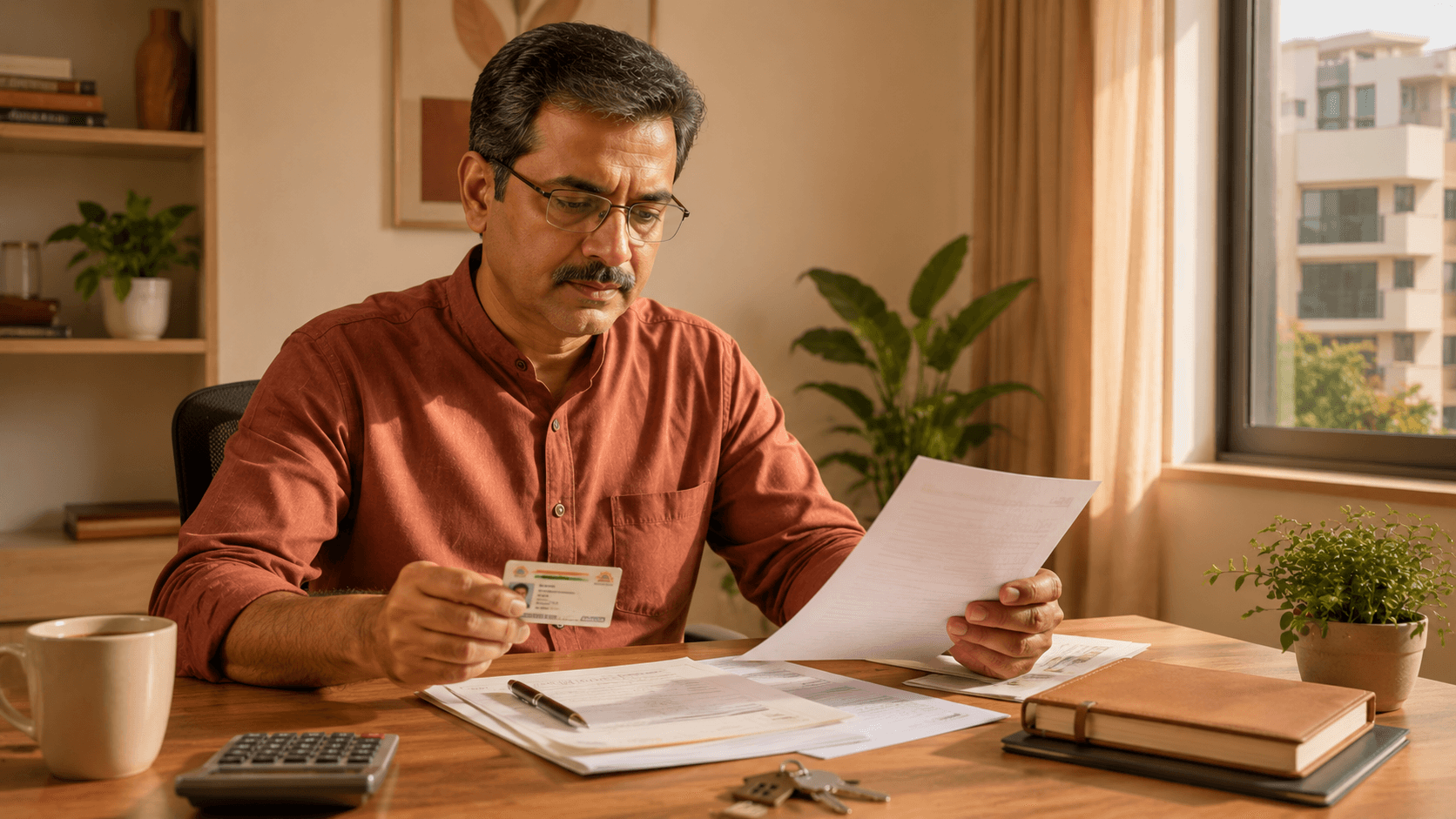
“A broker finds you a tenant fast. They do not find you a good one. Here is exactly how to find verified, reliable tenants without paying commission — and what to check before you hand over the keys.”
How to Find Verified Tenants Without a Broker
A broker finds you a tenant fast. They do not find you a good tenant. The two are not the same thing. Finding a verified, reliable tenant without paying one month's commission is entirely possible in 2026 — if you know exactly what to verify, where to list, and how to screen before you hand over the keys.
Why skipping the broker does not mean skipping due diligence
Brokers give owners a false sense of security. They run no background checks. They verify nothing. Their job is to close the deal — not to protect you during the tenancy. The tenant a broker brings you has been screened no more thoroughly than one you find yourself.
When you remove the broker, you take on the screening responsibility directly. This is not more work — it is better work, because you decide what matters most for your specific property rather than accepting whoever the broker brings first.
The difference between a good and a bad tenancy almost always traces back to decisions made before the keys were handed over. Owners who screen well have fewer disputes, fewer missed payments, and longer tenancies. Owners who rush — with or without a broker — pay for it later.
Where to find verified tenants without a broker
The platform determines the quality of the applicants you receive before you have screened a single person. Start here:
Verified owner platforms with KYC-verified tenants
The highest-quality source. These platforms verify tenant identity via Aadhaar before allowing contact — so every inquiry you receive comes from a real, identifiable person. On rentley, both owners and tenants complete Aadhaar-based KYC before transacting. When a tenant contacts you, you already know their identity is confirmed. This filters out fake inquiries, anonymous spam, and non-serious browsers from the first contact.
Society networks and RWA groups
Post in your building's WhatsApp group or resident welfare association network. Referral tenants from within the same society or from existing residents' contacts tend to be higher quality — there is social accountability built in. This works best for mid-market and premium properties where existing residents are likely to know professionally suitable tenants.
Office and corporate networks
If your property is near an IT park, hospital, or university, reach out directly to HR or housing teams at nearby companies. Many large employers maintain informal lists of properties available for their employees. This gives you a tenant whose employer, income, and identity are all verifiable through a single source.
⚠ Avoid open classifieds for tenant discovery
OLX, Facebook groups, and unverified listing sites attract the widest range of applicants — including scammers who target owners. An anonymous inquiry with no identity verification is a starting point for a dispute, not a tenancy. Use these channels only as a last resort and require identity documents before any visit.
How to screen tenants yourself: step by step
-
Define your ideal tenant before you list
Working professional, small family, or student — pick one. Add income requirement: a tenant's monthly rent should not exceed one-third of their monthly take-home pay. For a ₹25,000/month flat, the tenant should earn at least ₹75,000/month. State your preference clearly in the listing so unqualified applicants self-select out before contacting you.
-
Verify identity before the property visit
Ask for Aadhaar card and PAN card on the first contact — before showing the property. A serious tenant has these ready. Anyone who hesitates or deflects is worth questioning. If you are on a verified platform, this step is already done — the platform has confirmed the tenant's Aadhaar identity before the inquiry reached you.
-
Verify income — always, for every applicant
Ask for the last 3 months' salary slips or bank statements. For self-employed applicants, ask for the last 6 months' bank statements and the most recent ITR. Income verification is the single most important factor in predicting rent payment reliability. Do not skip this step for applicants who seem trustworthy in person — payment reliability has no correlation with likability.
-
Call the previous landlord
Ask for the name and contact of the previous landlord and call them directly. Ask three questions: Did they pay rent on time? Did they take care of the property? Would you rent to them again? A yes-yes-yes is strong signal. Any hesitation on question two or three warrants a direct follow-up. Do not accept "they were fine" — ask for specifics.
-
Meet in person before deciding
Documents tell you facts. A meeting tells you character. Conduct the property visit yourself — do not send a relative or caretaker for the first showing. The conversation at a visit tells you how a person communicates, how they treat a space they are evaluating, and whether they ask reasonable questions. Someone who does not ask a single question about the property is not thinking long-term.
-
Complete police verification before move-in
Tenant police verification is mandatory in Bangalore and is the owner's legal responsibility. Submit tenant details via the Karnataka Police e-Services portal or the Suraksha app within 24 hours of move-in. Collect the acknowledgement slip. Owners who skip this face liability under Section 188 of the IPC if any incident occurs at the property. It takes under 15 minutes online and is non-negotiable.
-
Sign a registered agreement before handing over keys
No keys before paperwork — ever. Get the rental agreement stamped via the Kaveri Online Services Portal, signed by both parties, and paid security deposit via bank transfer with a written receipt. The agreement is your protection for everything that follows: rent disputes, deposit deductions, notice periods, and eviction if it comes to that.
Green flags and red flags: what to look for
- Identity documents ready at first contact
- Salary slips provided without hesitation
- Previous landlord reference given freely
- Asks specific questions about the property
- Proposes bank transfer for deposit
- Has rented before with clean history
- Aadhaar-verified on the platform
- Wants to read the agreement before signing
- Cannot provide identity documents immediately
- Asks to skip the agreement or delay signing
- Wants to pay deposit in cash
- Unwilling to share previous landlord contact
- Wants to move in "immediately" with no time for checks
- Income documents unclear or inconsistent
- Negotiates every single clause aggressively
- Avoids direct answers about occupation or household
Documents to collect from every tenant
Collect and keep copies of all these before handing over keys. Store them securely — these are your legal protection throughout the tenancy.
- Aadhaar card — original sighted, copy collected
- PAN card
- Last 3 months' salary slips or 6 months' bank statements
- Employment offer letter or company ID
- Passport-size photos (2 copies)
- Previous rental agreement or NOC from previous landlord
- Police verification form — completed and submitted
- Signed rental agreement with your own copy retained
- Bank transfer receipt for security deposit
What verified identity actually changes
Most of the risk in a broker-free rental comes from one thing: not knowing who you are renting to. A broker does not solve this — they pass the same unknown tenant to you and collect a month's rent for doing so.
Aadhaar-based identity verification changes the equation fundamentally. When a tenant has completed KYC on a verified platform, you know their legal name, their Aadhaar is on record, and their contact details are confirmed. The anonymity that enabled most tenant fraud disappears. A tenant who knows their identity is on file behaves differently from one who is anonymous.
This is the core of what rentley is designed to do. Every tenant who contacts you through the platform has completed Aadhaar-based KYC — so the screening conversation starts from a foundation of confirmed identity rather than an anonymous inquiry. You still do your own income verification, your own visit, and your own agreement. But you start from a position of knowing who you are talking to.
The right vacancy length
Many owners panic at 2 to 3 weeks of vacancy and accept the first tenant who appears. This is the most expensive decision in rental property management. One bad tenancy costs more than 3 to 6 months of vacancy — in unpaid rent, legal fees, property damage, and the time to recover.
Take the time to screen properly. A verified tenant found in 3 weeks is worth infinitely more than an unscreened tenant found in 3 days. The vacancy cost is fixed. The tenancy cost is open-ended.
If you are an owner ready to list, read our step-by-step guide on how to list your property for rent online. For the legal side of what to include in your agreement, see our guide on Karnataka rent agreement rules in 2026.
Find verified tenants on rentley
Every tenant is Aadhaar-verified before they contact you. Zero brokerage. Zero commission.
List your property free Aadhaar-verified tenants · No broker · Direct contactLooking for a home?
Browse verified rentals directly from owners. No brokerage, no hidden fees.
Explore Listings